International project: legal support through the university for migrants and asylum seekers in Aruba
In Aruba, many asylum seekers do not dare to ask for protection. Our partner Tienda di Ley provides legal advice and information. With support from the Dutch Council for Refugees, this initiative has grown into a sustainable legal support centre that contributes to humane solutions on the island.

Background
Since 2017, many people have fled Venezuela because of political repression and economic hardship. Some of them have sought safety in Aruba, a Caribbean island and country within the Kingdom of the Netherlands. On clear days, Aruba is visible from the Venezuelan coast.
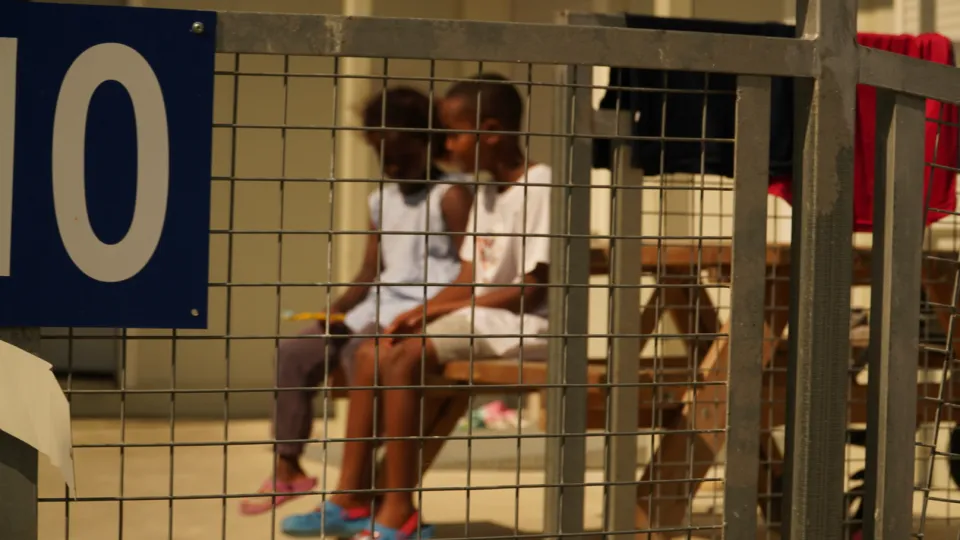
People who arrive irregularly in small and unsafe boats are, when intercepted by the Dutch Caribbean Coast Guard, handed over to the police and placed in detention in very poor conditions. Raids also take place at workplaces, where people are arrested and deported. Return often happens without legal assistance or a properly followed asylum and appeals procedure. This can be dangerous, especially for people who may face immediate risk after return.
As a result, many people stay out of sight. They live in uncertainty, children do not go to school or attend only irregularly, and adults often work in vulnerable sectors such as construction, cleaning or sex work. This increases the risk of exploitation and limits access to healthcare and housing.
Aruba has signed the Refugee Convention and has an asylum procedure. In practice, however, people are almost never granted a residence permit. At the same time, there are very few local civil society organisations that provide advice or legal support to asylum seekers and migrants on the island.
Due to USAID budget cuts in 2025, several international organisations have withdrawn or scaled down their activities. This has made the role of Tienda di Ley even more important.
About Tienda di Ley
Tienda di Ley, which means 'legal aid shop' in Papiamento, started in 2022 on the initiative of two lecturers from the Faculty of Law at the University of Aruba. The project has a double purpose: law students gain practical experience, while people with low incomes or without legal status in Aruba can receive legal advice.
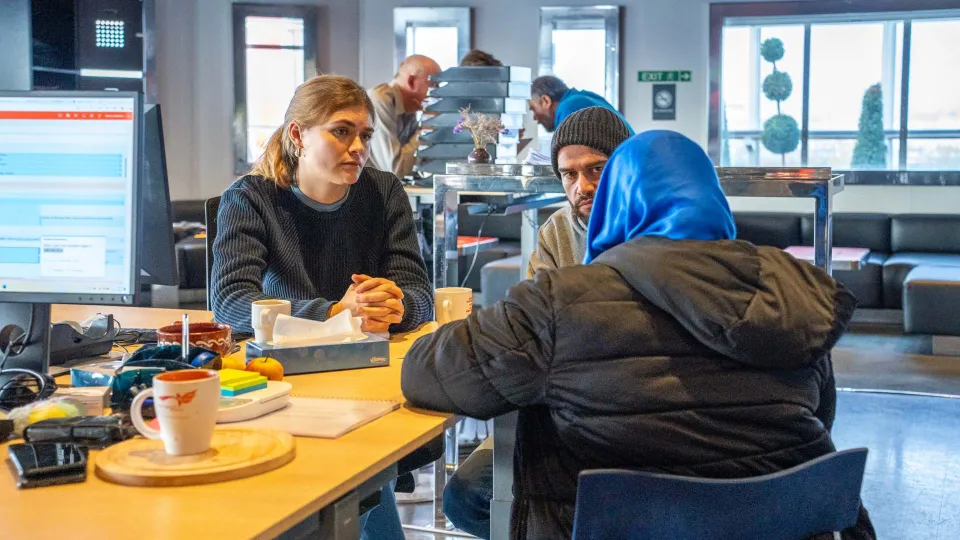
Law students hold free consultation sessions and provide written legal advice under the supervision of lawyers and lecturers. Tienda di Ley also organises information sessions on issues such as asylum, housing and labour rights. These sessions are held in different neighbourhoods, where the target group can access them easily and free of charge. This helps migrants and asylum seekers better understand their rights and strengthen their position in society.
Tienda di Ley is now developing into a first-line legal advice centre for people who cannot afford a lawyer.
Tienda di Ley started as a pilot, but it is growing into something lasting. We are building a place where students learn through practice and where people can turn for reliable legal support.
Brechtje Huiskes, coordinator and lecturer
How do we work together?
The Dutch Council for Refugees works with Tienda di Ley to help build a sustainable legal aid centre at the University of Aruba. Our aim is for Tienda di Ley to become fully independent, with its own board, a clear structure and suitable funding. We also provide practical training to help students support the target group in the best possible way.
This allows students to gain hands-on experience, while refugees and migrants gain access to legal support. These students are the lawyers and policymakers of the future. The knowledge and experience they gain through Tienda di Ley can help them continue supporting this target group after graduation.
Together, we provide training and guidance, in addition to building awareness within the community. In this way, Tienda di Ley is becoming a lasting and well-organised support point for people in need of legal help.
Together with the Dutch Council for Refugees, we are strengthening the legal aid centre as a sustainable support point. In this way, we help make sure that people in Aruba are not only heard but can also move forward.
Benedicta Deogratias, coordinator and lecturer
Results so far
Tienda di Ley has created a place in Aruba where people can turn for reliable legal information and support. The legal aid centre is still developing, but it already shows how important accessible and practical help is for asylum seekers and migrants. It also helps make problems from daily practice more visible, so that these issues can be discussed more openly.
So far, this has led to:
Greater awareness of rights and procedures within the community.
Training and guidance for students, and where possible also for lawyers.
A second academic year in which students can follow Tienda di Ley as part of their studies.
Consultation sessions carried out by students.
General information sessions provided by students in local neighbourhoods.
During our consultation hours, we see how great the need is for clear information. Through small steps, we can help people understand their rights and regain some control over their situation.
Esther Jones, student
Our role as guide and advocate
The Dutch Council for Refugees supports Tienda di Ley with knowledge, resources, training and guidance, so that people can more quickly access the right information and support. We also bring experiences from daily practice to the attention of relevant stakeholders. In this way, we work together on an approach that offers protection, respects human dignity and works better in practice.
Our next steps
Together with Tienda di Ley, we are continuing to build:
A strong organisation with a clear way of working.
Training and coaching for students, lawyers and supervisors.
A permanent place in the university’s educational programme.
Steps towards structural funding and long-term continuity.
More information?
Please contact us at ip@dcfr.nl. You can also read more about our international projects here.